All prices on this page are quoted in USD unless otherwise noted.
Every week, we get some version of this question from buyers in Australia, Europe, Hong Kong, and beyond. It is the single most common enquiry we receive, and the answer is more nuanced than most real estate blogs will tell you.
So let us be direct: foreigners cannot hold freehold land title in Indonesia. That's the law, and it's not changing anytime soon. But that doesn't mean you can't buy, own, and profit from Bali property. Thousands of foreign investors already do. The mechanism is different from what you're used to back home, but when structured correctly, it's legally sound and financially rewarding.
At Balitecture, we've guided hundreds of foreign buyers through this process over the past decade. This guide breaks down every legal pathway, the real costs involved, and the mistakes we see people make when they try to go it alone.
Three Legal Pathways for Foreign Buyers
Indonesian property law offers three legitimate routes for foreign nationals to control and profit from property in Bali. Each has a different cost profile, level of control, and time horizon.
1. Leasehold (Hak Sewa)
This is the most common and straightforward route for foreign investors in Bali. A leasehold is exactly what it sounds like: you lease the land from an Indonesian landowner for a fixed term and build on it, or you buy an existing villa on leased land.
Typical terms run 25 to 30 years, with contractual extension options. A well-structured lease includes a first right of refusal for renewal, written in both Indonesian (Bahasa) and English, and notarised by a licensed PPAT (land deed official).
What this means practically: You have full use and control of the property for the lease term. You can renovate it, rent it out on Airbnb, live in it, or resell the remaining lease. The landowner has no say in how you use the property during the lease period, provided you comply with zoning and licensing requirements.
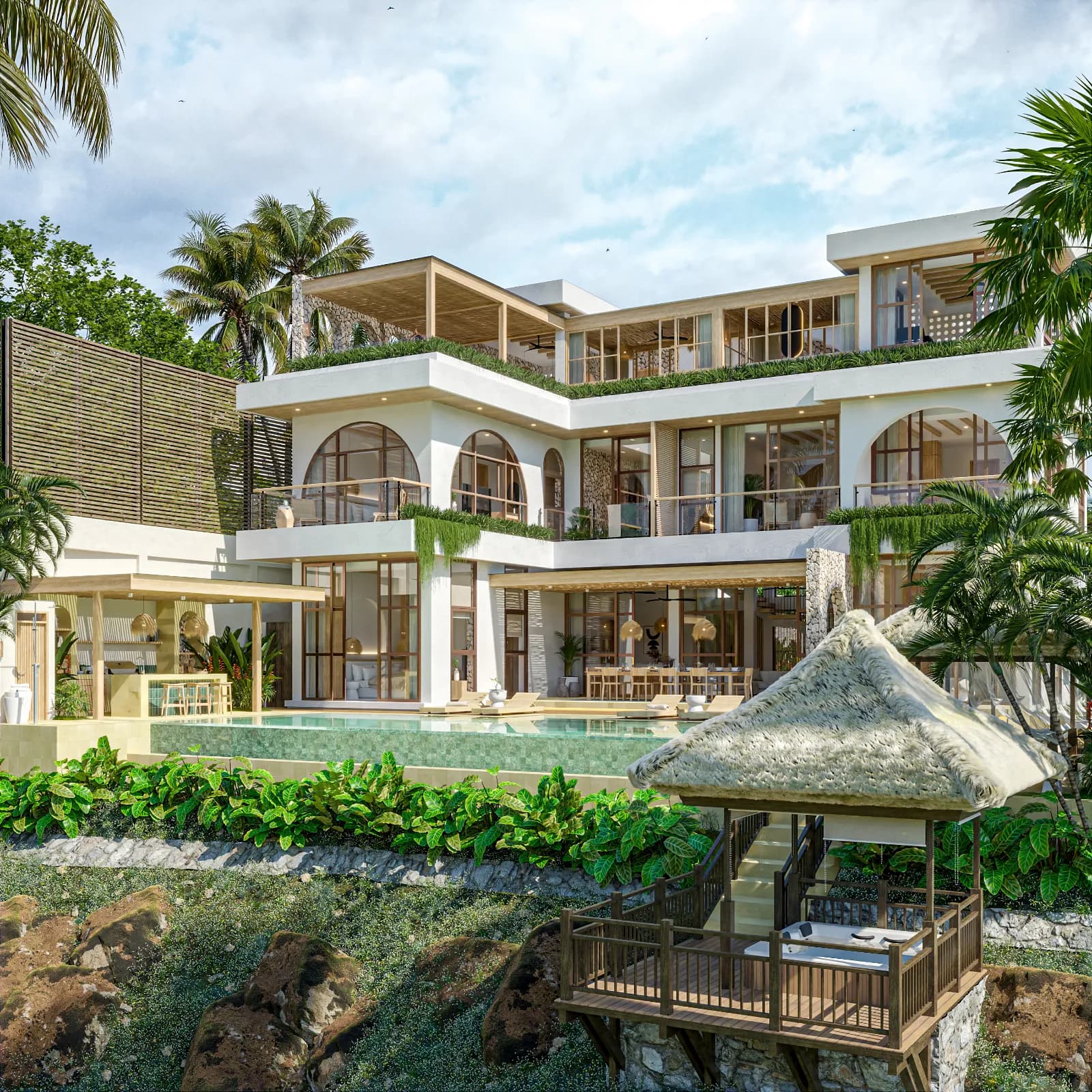
All of our developments, including Nara Villas and Suku Residences, operate on a 30+30 year leasehold structure - 30 years initial with a 30-year extension option built into the contract from day one.
Leasehold at a Glance
2. PT PMA (Foreign-Owned Company)
A PT PMA is a limited liability company with foreign ownership, registered under Indonesian law. Through a PT PMA, you can hold a Hak Guna Bangunan (HGB), which is a right to build on and use land for up to 30 years, renewable for another 20, and then extendable again for 30 more.
This route gives you something closer to ownership than leasehold. The HGB title is registered at the land office (BPN), and your company name appears on the certificate. You can mortgage the property, use it as collateral, and it offers stronger legal protections in disputes.
The downside? Cost and complexity. Setting up a PT PMA requires minimum paid-up capital of IDR 10 billion (roughly $620,000 USD), plus annual reporting obligations, corporate tax filings, and ongoing compliance costs. It makes sense for serious investors with multiple properties or a development business, not for someone buying a single holiday villa.
PT PMA at a Glance
3. Hak Pakai (Right to Use)
Hak Pakai is a government-granted right to use land, available directly to foreign individuals who hold a valid Indonesian visa (KITAS or KITAP). It runs for an initial 30 years, extendable to 20, then 30 more, totalling up to 80 years.
This is technically the most direct form of foreign property holding in Indonesia. Your name appears on the certificate. However, it comes with restrictions: the property must be used for residential purposes (not commercial rental), and you need to maintain a valid stay permit throughout the tenure.
For investors focused on rental income, Hak Pakai is usually not the right fit. It's better suited for retirees or long-term residents who plan to live in the property themselves. If your goal is ROI through short-term rentals, leasehold or PT PMA are stronger options.
A Word on Nominee Arrangements
We need to address this because it still comes up constantly. A nominee arrangement is where you pay an Indonesian citizen to hold freehold title "on your behalf." On paper, they own the property. You hold a side agreement saying it is really yours.
This is illegal. The 1960 Basic Agrarian Law (UUPA) explicitly prohibits foreigners from indirectly holding freehold land. Indonesian courts have consistently ruled against foreign parties in nominee disputes. If your nominee decides the property is actually theirs, or if their family makes a claim after death, you have virtually no legal recourse.
We've seen buyers lose properties worth hundreds of thousands of dollars this way. It is not worth the risk, regardless of how trustworthy the nominee appears. Work with a reputable notary and use a legitimate ownership structure. Full stop.
Step-by-Step Buying Process for Foreigners
If you're buying a completed villa or an off-plan development, the process follows a similar pattern. Here's what to expect when purchasing through leasehold, which is the most common route.
Define Your Investment Goals
Are you buying for personal use, rental income, or capital appreciation? This determines the location, property type, and ownership structure. Our team at Balitecture starts every engagement with this conversation.
Find the Right Property or Land
Browse available developments or work with our land sourcing team to find suitable plots. We check zoning (the property must be in Bali's Pink Zone for short-term rentals), road access, flood risk, and title history before recommending anything.
Due Diligence and Legal Checks
Your notary verifies the land certificate at the BPN (land office), checks for encumbrances or disputes, confirms the seller's identity, and ensures the land matches its stated boundaries. Never skip this step, even on a referral.
Negotiate and Sign the Agreement
The lease agreement (Perjanjian Sewa Menyewa) is drafted by a notary, covering the term, extension options, permitted use, and payment schedule. Both parties sign before the notary, and the agreement is registered.
Payment and Registration
Payments are typically structured in stages, especially for off-plan properties. For completed properties, expect a deposit followed by full settlement within 30-60 days. Transfer taxes and notary fees are paid at this stage.
Build or Take Possession
If buying land to build, you will work with an architect and construction team. Balitecture handles this end-to-end, from architectural design through to construction, furnishing, and property management setup.
Costs Breakdown for Foreign Buyers
Beyond the property price itself, here are the additional costs you should budget for. These apply to leasehold purchases, which account for the majority of foreign transactions.
Common Mistakes Foreigners Make
After a decade of working with international buyers, we see the same errors come up repeatedly. Here are the ones that cost people the most money and stress.
Skipping due diligence to "save time"
A proper title check takes 2-4 weeks. Some buyers skip it because they are excited or pressured by agents. This is how you end up with disputed land, incorrect boundaries, or a lease on land that is zoned for agriculture and cannot be used for villas. The $1,000 you spend on due diligence could save you $200,000.
Buying outside the Pink Zone
Bali's zoning regulations matter more than ever. Properties outside designated tourism zones (the Pink Zone) face restrictions on short-term rentals. If your investment thesis relies on Airbnb income, make sure the property is properly zoned. All Balitecture developments are in approved tourism zones.
Using an unlicensed notary
Not all notaries are equal. You need a PPAT (Pejabat Pembuat Akta Tanah) who is licensed to handle land transactions in the specific regency where the property is located. Using a general notary without PPAT authority means your agreement may not be properly registered.
Not budgeting for the full project cost
The land lease or villa price is just the starting point. Factor in taxes, legal fees, furnishing, pool construction, landscaping, and ongoing management costs. We publish transparent construction cost breakdowns specifically to help buyers plan properly.
Choosing the cheapest option over the right structure
Nominee arrangements look cheaper because you avoid PT PMA costs. But the risk is total loss. Leasehold is simple and proven. PT PMA costs more upfront but gives you stronger rights. Match the structure to your investment size and time horizon, not just the setup fee.
Can Australians Buy Property in Bali?
Yes. Australians can buy property in Bali on exactly the same terms as any other foreign national: leasehold, a PT PMA company, or Hak Pakai. There is no special bilateral arrangement and no extra hurdle for Australian citizens. A significant portion of Balitecture's clients are Australian, drawn by how close it is (roughly 6 hours from Perth, 7 from Sydney) and by returns that suburban Australian property simply cannot match. Here's what Australian buyers specifically should know.
Tax obligations: As an Australian tax resident, rental income from Bali property is taxable in Australia. You will also pay Indonesian withholding tax on rental income (typically 10% for non-residents). The Australia-Indonesia Double Taxation Agreement prevents you from being taxed twice on the same income, but you will need to declare it.
Currency considerations: Your lease payments and construction costs are typically in USD or IDR. AUD volatility can impact your effective purchase price by 5-10% in either direction. Some buyers lock in exchange rates for staged payments.
Building comparison: The same villa that costs $300,000 to build in Bali would cost $1.5-2 million in suburban Sydney or Melbourne. Even after factoring in flights, legal fees, and management costs, the numbers work heavily in Bali's favour. See our construction cost guide for detailed comparisons.
Financing: Australian banks will not mortgage a villa in Bali, so foreign purchases are almost always funded with cash, savings, or equity drawn from an existing Australian property. Build this into your plan early, because it changes both your budget and your timing.
Using your super: A self-managed super fund generally cannot hold an overseas villa that you also use personally, as it tends to breach the sole-purpose test and related-party rules. The structures that do work are narrow and strict. Get specific advice from your SMSF accountant before assuming super is an option.
One common myth: the Foreign Investment Review Board (FIRB) governs foreigners buying property in Australia, not Australians buying abroad. It has nothing to do with your Bali purchase, so you can set that worry aside.
Why Balitecture: We are Australian-founded and have offices in Bali and Hong Kong. Our team understands the concerns Australian buyers have because we have been through the same process ourselves. We handle everything from land sourcing to architectural design, construction, and ongoing villa management.
If you are exploring Bali as an investment destination more broadly, our Invest in Bali guide covers market trends, yield data, and why international investors are allocating capital here. For a detailed breakdown of freehold versus leasehold, see our companion article.