All prices on this page are quoted in USD unless otherwise noted.
If you're looking at Bali property, you're probably looking at Canggu or Uluwatu. Together they account for the majority of foreign investment activity on the island. Both are popular. Both generate strong yields. And they're genuinely quite different markets.
We build in both areas. This isn't a plug for one over the other - it's an honest look at what each market offers, what the data says, and which type of investor each one suits.
Short version: Canggu is lower risk, steadier income. Uluwatu has more upside - in both yield and capital growth - but the gap in land prices is widening fast.
The numbers side by side
| Metric | Canggu | Uluwatu |
|---|---|---|
| Leasehold land price | $70K-95K per 100m² | $40K-60K per 100m² |
| Entry villa price | $350K-$600K | $229K-$450K |
| Gross rental yield | 10-15% | 15-25% |
| Avg nightly rate | $150-$350/night | $250-$500/night |
| Occupancy rate | 85%+ | 70-90% |
| Land value growth | 8-12%/year | 15-25%/year |
| Avg stay length | 3-5 nights | 5-7 nights |
| Development zoning | Urban/mixed | Pink Tourism Zone |
Canggu: the established income play
Canggu is the most liquid, most established investment market in Bali. It has some of the most consistent year-round occupancy on the island - regularly 85%+ - because it attracts a wide range of guests: surfers, digital nomads, honeymooners, wellness travellers, and long-stay visitors who want Bali's food scene and nightlife within walking distance.
That occupancy depth is why Canggu works for investors who can't afford to have the villa sit empty for months. The demand is there year-round.
The flip side is cost. Canggu has become expensive both to buy into and, increasingly, to stay in, and much of its established villa stock dates from the early boom years, so outside the newest pockets you are often competing with, or buying, older builds rather than the newer design-led villas concentrated elsewhere on the island.
What you pay
Leasehold land in Canggu runs $70K-95K per 100m² depending on location - close to the beach and Echo Beach is at the top end, with Berawa around $82.5K per 100m² and Pererenan slightly lower at $55K-75K per 100m². A decent 2-bedroom private pool villa will cost $350K-$450K to buy or build in most Canggu pockets. Good ones in prime positions are $500K+.
That's the catch. Canggu's entry price has risen significantly over the past five years, and the yield compression that follows high land prices is showing. Gross yields of 10-15% are still strong by global standards, but they're lower than what you can achieve in Uluwatu for a smaller capital outlay.
Who Canggu suits
Investors who want maximum occupancy security and don't need peak yields
Buyers who plan to use the villa personally - Canggu has the best infrastructure (restaurants, coworking, surf, nightlife)
Investors prioritising resale liquidity - Canggu has the widest pool of potential buyers
Anyone building a villa management business across multiple properties (the guest pool is deep)
Uluwatu: the growth market
Uluwatu has outperformed every other area in Bali on both yield and capital growth over the past four years. Clifftop land that was $15K per 100m² in 2020 is now $40K-60K per 100m². The villas that were built for $200K are now selling for $550K+. And the rental yields on those villas are still running at 18-25% gross.
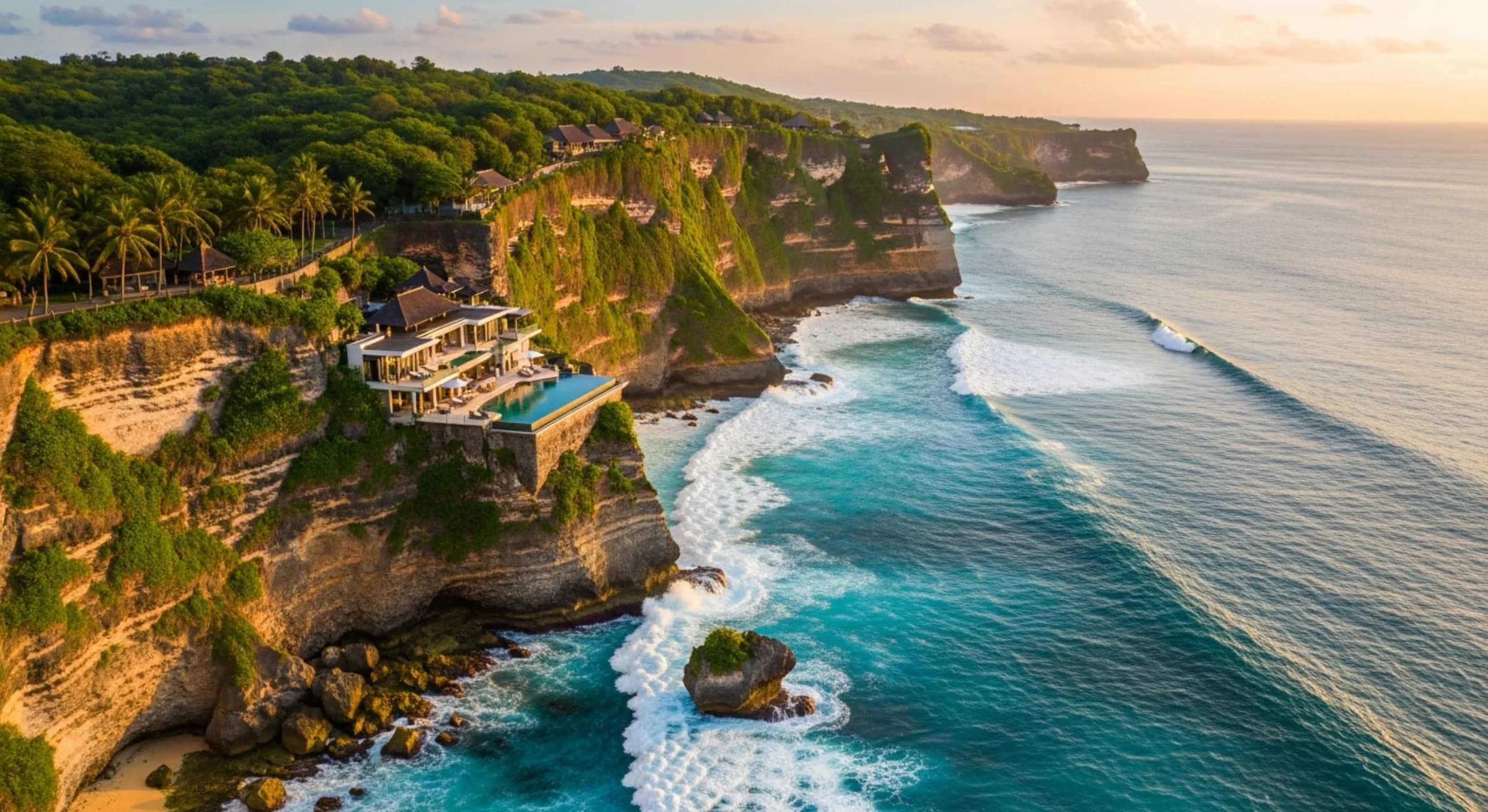
This isn't random. Uluwatu has structural advantages that don't exist in Canggu: finite clifftop supply (you cannot create more oceanfront land), government-designated Pink Tourism Zone status (controlled development, planned infrastructure), and a premium beach club ecosystem (Karma, Sundays, Atlas, Savaya, Single Fin) that drives high-spending international visitors.
It is also where the newest villas are being built. Canggu's older pockets still trade heavily on stock from the early boom, while Uluwatu is filling with fresh, design-led homes built around wellness - cold plunges, saunas, yoga decks - the kind of features today's guests increasingly look for. Add the white-sand beaches (Bingin, Padang Padang, Nyang Nyang), the clifftops, and a beach-club scene that keeps getting more glamorous, and it is no surprise more travellers now book Uluwatu first.
The typical Uluwatu guest is staying 5-7 nights and paying $300-500/night. Average spend per booking is meaningfully higher than Canggu. Combined with strong occupancy - 70-90% for a well-managed villa that takes direct bookings and lists across Airbnb and Booking.com - that is what makes Uluwatu the premium yield play.
Pink Tourism Zone - what it means for investors:Uluwatu's Pink Zone restricts development to maintain the area's premium character. This limits supply, which supports land values. Projects built within the zone comply with government infrastructure plans, which gives them more stable long-term legal footing than unzoned developments elsewhere in Bali.
What you pay
Leasehold land in Uluwatu runs $40K-60K per 100m² for prime clifftop and ocean-view positions, with inland plots 5-10 minutes from the cliff coming in at $25K-40K per 100m². The entry point for a good 2-bedroom villa investment is around $229K-$269K (our Nara Villas 2BR is $269K). You can buy existing completed villas in Uluwatu for $350K-$600K depending on spec and position.
The lower land cost than Canggu is one of the reasons Uluwatu yields are higher. You're getting more rental income relative to what you paid for the asset.
Who Uluwatu suits
Investors optimising for yield - 18-25% gross is meaningfully better than Canggu at equivalent entry prices
Buyers focused on capital growth - the Pink Zone supply constraint creates a different growth dynamic to Canggu
Investors who want the island's highest nightly rates alongside strong year-round occupancy
Anyone buying off-plan - off-plan pricing in Uluwatu still offers strong upside vs completed villa prices
Where the real difference shows up
Run the numbers on a comparable $300K investment in each area and the gap becomes concrete.
Canggu - $350K villa
Uluwatu - $269K villa
Both villas produce a similar net yield of around 13% - but the Uluwatu entry price is $81K lower. That means you're generating comparable returns on a smaller capital outlay, which leaves more capital free for a second acquisition or a higher-spec build. The real Uluwatu advantage shows up in capital growth: land values in Uluwatu have risen 15-25% per year versus 8-12% in Canggu, so the total return picture over a 5-year hold period is materially stronger.
To put that in concrete terms: a Canggu villa bought for $350K in 2021 is likely worth $420K-$450K today. A comparable Uluwatu villa bought for $220K in 2021 is likely worth $380K-$450K - a higher percentage gain on a lower starting number.
Infrastructure and lifestyle
This is where Canggu genuinely wins, and for personal use investors it matters.
Canggu has better daily infrastructure: more restaurants, better coffee, coworking spaces, surf schools, yoga studios, and a denser social scene. If you're planning to spend extended time at the villa yourself - holidays, month-long stays, or eventual relocation - Canggu is more comfortable to live in day to day.
Uluwatu's lifestyle is the one travellers are increasingly gravitating to. The surf is world-class (Uluwatu reef, Padang Padang, Bingin), the beaches and clifftop setting are genuinely dramatic, and the beach clubs are more glamorous - which is exactly why the newer, wellness-led villas here rent so well. The honest trade-off is daily convenience: supermarkets, pharmacies, and general services are still less developed than Canggu, though the area is catching up quickly.
The distance from the airport is roughly the same: 40-60 minutes for Canggu, 45-60 minutes for Uluwatu depending on traffic.
Our Take
Which one to choose
For pure investment, Uluwatu wins on both yield and capital growth right now. The Pink Zone supply constraint, the continued rise in premium tourism, the newer wellness-led villa stock that today's guests prefer, and the lower entry price relative to Canggu make it the stronger play for investors who are focused on returns.
For personal use with an investment component, Canggu's infrastructure and occupancy depth make it easier to manage and more comfortable to stay in. If you want a villa you'll actually use for 4-6 weeks a year yourself, Canggu is the better lifestyle choice.
If we had $600K to deploy across both markets, we'd put two-thirds in Uluwatu and one-third in Canggu. Higher growth in Uluwatu, steady cashflow from Canggu. That's the hedged version. But if you're a single-asset buyer optimising for returns, Uluwatu is the answer.
Invest in Uluwatu or Canggu